Imagine this: It's 2:47 AM. Generator down at your factory. You roll out of bed, fix it by 5:15 AM, mark the work order complete, and head home.
Three months later, the generator fails again. Different issue. But now there's an insurance claim. And the insurer wants proof the February maintenance actually happened.
The work order says "complete."
The insurer says "prove it."
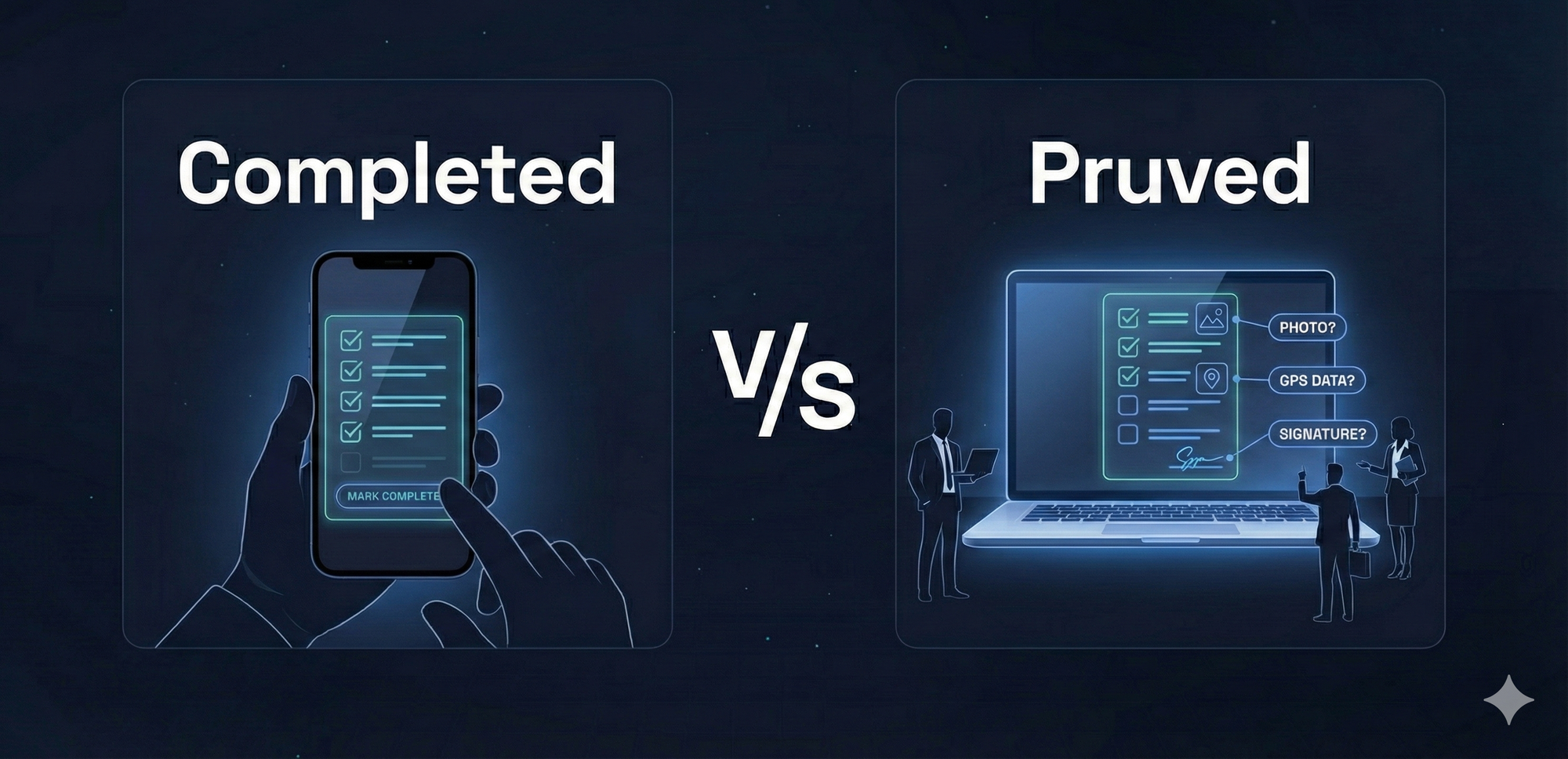
That's when everyone realizes: the checkbox in your CMMS doesn't prove anything.
What Work Orders Actually Do
Work orders are brilliant management tools. They track assignments, schedule compliance, labor hours. They keep operations running and regulatory boxes checked.
But they answer back-office questions:
- Who was assigned?
- Was it marked complete?
- When was it closed?
They can't answer what matters when things go wrong:
- Was the technician actually on site?
- What exactly did they do?
- How do we know it was done right?
The "Complete" Problem
Sometimes you do perfect work but just check the box. No photos, no notes.
Sometimes conditions were different than expected. You applied a temporary fix. The work order doesn't capture that nuance.
Sometimes you show up, realize you need a permit or another person, and make a mental note to come back. That note gets buried under ten more emergencies.
And sometimes you do everything perfectly. But three months later when there's a warranty dispute, "PM completed 2/15" isn't enough. They want proof. And you can't remember one job among 200 others.
When It Breaks Down
Imagine that generator claim. The insurer asks:
"Prove the technician was on site." Work order has a timestamp. No GPS.
"Show what condition it was in before maintenance." Work order has a checklist. No photos.
"Verify what work was performed." Work order says "monthly PM per schedule." No evidence.
The work order tracked that maintenance happened. It couldn't prove the work was actually done when proof mattered most.
Task Completion vs. Accountability
When you close a work order, you're saying "I did what you told me to do."
But when equipment fails and fingers point, what you need is: "Here's exactly what I found, exactly what I did, with timestamps and photos nobody can question."
Work orders are task managers. They weren't designed to be accountability systems.
That's fine until your reputation is on line and someone asks you to prove what you did three months ago.
You did the work. You know you did it right.
But the system can't prove it.
What's Missing
The tech who fixed that generator did everything right. What they didn't have was a record showing they were physically on site, what they found, what they did, and what they left behind. All timestamped, GPS verified, tamper-proof.
Not to replace the work order. To complete it.
To turn "marked complete" into "verified proof."
Because when someone questions your work three months later, you deserve better than a checked box in a system that was never built to protect you.
Have you ever had "marked complete" not be enough? What happened when someone asked you to prove work you did months ago?
If you've lived this problem, we're solving it. Get early access to Pruved.